Appearance & Behavior:
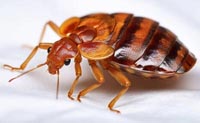
- Adult bed bugs are oval-shaped and flat, roughly the size of an apple seed. They cannot fly but are fast runners and, while favoring humans, can feed on pets.
- Types: The primary types are the common bed bug (Cimex lectularius) and the tropical bed bug (Cimex hemipterus).
- Lifespan & Breeding: They can live up to 10 months to a year. Females can lay 1–10 eggs per day and 200–500 in their lifetime.
- Feeding: They can survive for months without feeding, with some reports citing up to 70 days or more.
- Habitats: Common in homes, hotels, apartments, and transportation; they are not attracted to dirt, but to blood meals.
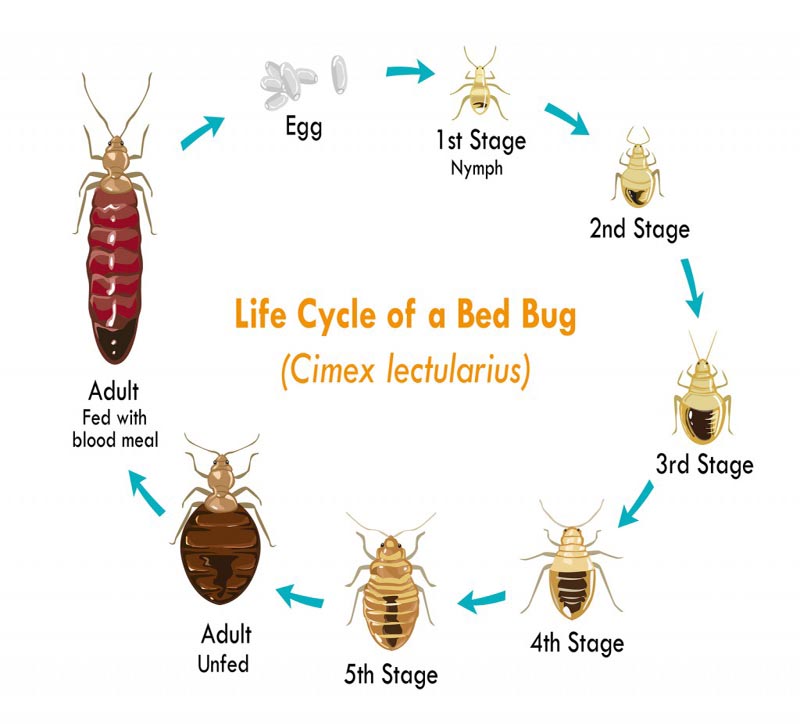
Bed Bug Life Cycle
Bed bugs multiply rapidly, with a single female laying 1–7 eggs daily and up to 500 in her lifetime. Eggs hatch in 6–10 days, and nymphs reach reproductive maturity in about 4–6 weeks, allowing the population to double every 16 days under favorable conditions.
A minor infestation can grow to thousands in 3–4 months.
Adult bed bugs typically live for 6 to 12 months, though some can survive over a year with regular feeding and moderate temperatures. They are highly resilient and can survive for 3 to 5 months without feeding in warm conditions, or up to 400+ days in cooler, dormant states.
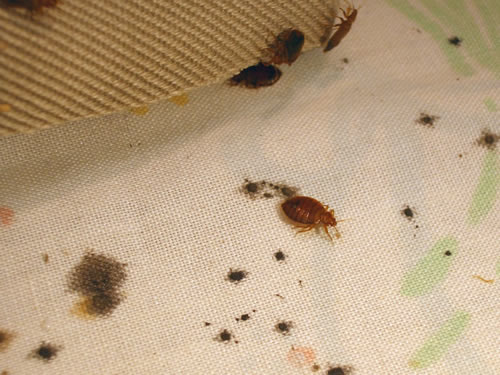
Bed bugs are small, flat, reddish brown parasitic insects (approx. 5mm) that feed exclusively on blood, typically at night, causing itchy bites and potential allergic reactions.
They hide in mattresses, furniture, and clutter, often spreading through luggage or used items. Effective control involves professional extermination, high-heat cleaning, and protective mattress encasements.
Ernie’s Pest Control does not use and does not recommend Heat Treatment for bed bug infestations. While heat treatments rapidly kill all bed bug life stages by raising room temperatures to lethal levels, major drawbacks exist.
High Upfront Cost
Thermal remediation is labor-intensive and requires highly specialized equipment. Depending on the size of your home, professional treatments generally run anywhere from $1,200 to upwards of $5,000, often making it double or triple the cost of traditional chemical treatments.
No Residual Protection
Unlike chemical treatments, heat offers no lasting barrier once the equipment is removed. If a single bug is missed, survives in a cold spot, or is reintroduced later via luggage or visitors, the infestation can immediately restart.
Risk of Bed Bugs Escaping
Bed bugs are incredibly mobile and actively sense temperature changes. As the room gets uncomfortably hot, they may flee into cooler, insulated areas like wall voids, electrical outlets, or neighboring apartments. Once the heat dissipates, they can emerge again.
Property Damage and Preparation
Preparing a home for heat treatment is a massive task. You must remove or protect heat-sensitive items—such as aerosol cans, vinyl records, candles, wax, medications, and certain electronics—to prevent melting or degradation. Excessive heat can also warp wood floors, melt plastic baseboards, and damage delicate artwork.
Ineffective in Poorly Insulated Spaces
In areas like thin-walled trailers, spaces with drop ceilings, or rooms with poor insulation, it can be physically impossible for the heaters to maintain a constant, lethal temperature (usually 120 degrees fahrenheit to 150 degrees fahrenheit) throughout every single nook and cranny.
Because of these drawbacks, Thermal Remediation is often only a short term solution and then requires a follow up chemical treatment to totally eliminate the pests.